Let's talk about the thing nobody wants to admit
Mismatched libido is one of the most common relationship problems I see. One partner wants sex twice a week. The other wants it twice a month. Or not at all. And both people end up feeling broken. The higher-desire partner feels rejected. The lower-desire partner feels pressured, guilty, resentful. It's a loop that kills intimacy faster than almost anything else.
Here's what I want you to know before we go further: this doesn't mean your body is wrong. It doesn't mean you don't love your partner. And it definitely doesn't mean you're frigid, broken, or undeserving of pleasure. Desire mismatches are about biology, stress, trauma history, medication, relationship dynamics, and about fifty other factors that have nothing to do with how attractive you find your partner.
But desire mismatch, left alone, does kill relationships.
The shame spiral nobody talks about
When your partner wants sex more often than you do, one of two things usually happens. Either you start saying yes when you don't want to (which builds resentment), or you keep saying no (which builds rejection). Both paths lead somewhere lonely.
The person with lower desire often internalizes this as a personal failing. "I'm not enough." "I'm broken." "I should want this more." The person with higher desire starts questioning themselves too. "Am I unattractive?" "Did I do something wrong?" Both of you end up in your heads instead of connecting.
The good news: tools like lemon vibrators and honest conversation can actually change this dynamic. Not by forcing desire to match, but by making pleasure less about frequency and more about quality and presence.
Why lemon vibrators change the conversation
A lemon clitoral vibrator like the Lem does something interesting for couples with mismatched libido. It separates "sex" from "my body being stimulated." That matters because desire mismatch is often really about willingness or mental load, not about physical capacity.
When you use a lemon vibrator solo or with your partner, you're not committing to a full sexual encounter. You're not obligating yourself to anything beyond fifteen minutes. You're not even necessarily building to penetration. You're just exploring sensation together, which feels less high-stakes than "okay, we're having sex now."
Many couples find that introducing a clitoral vibrator into their routine actually increases both partners' satisfaction. The higher-desire partner gets physical connection. The lower-desire partner gets to explore pleasure on their own terms, without the pressure of "producing" arousal on a timeline. And both of you get to experience what actually feels good instead of performing.

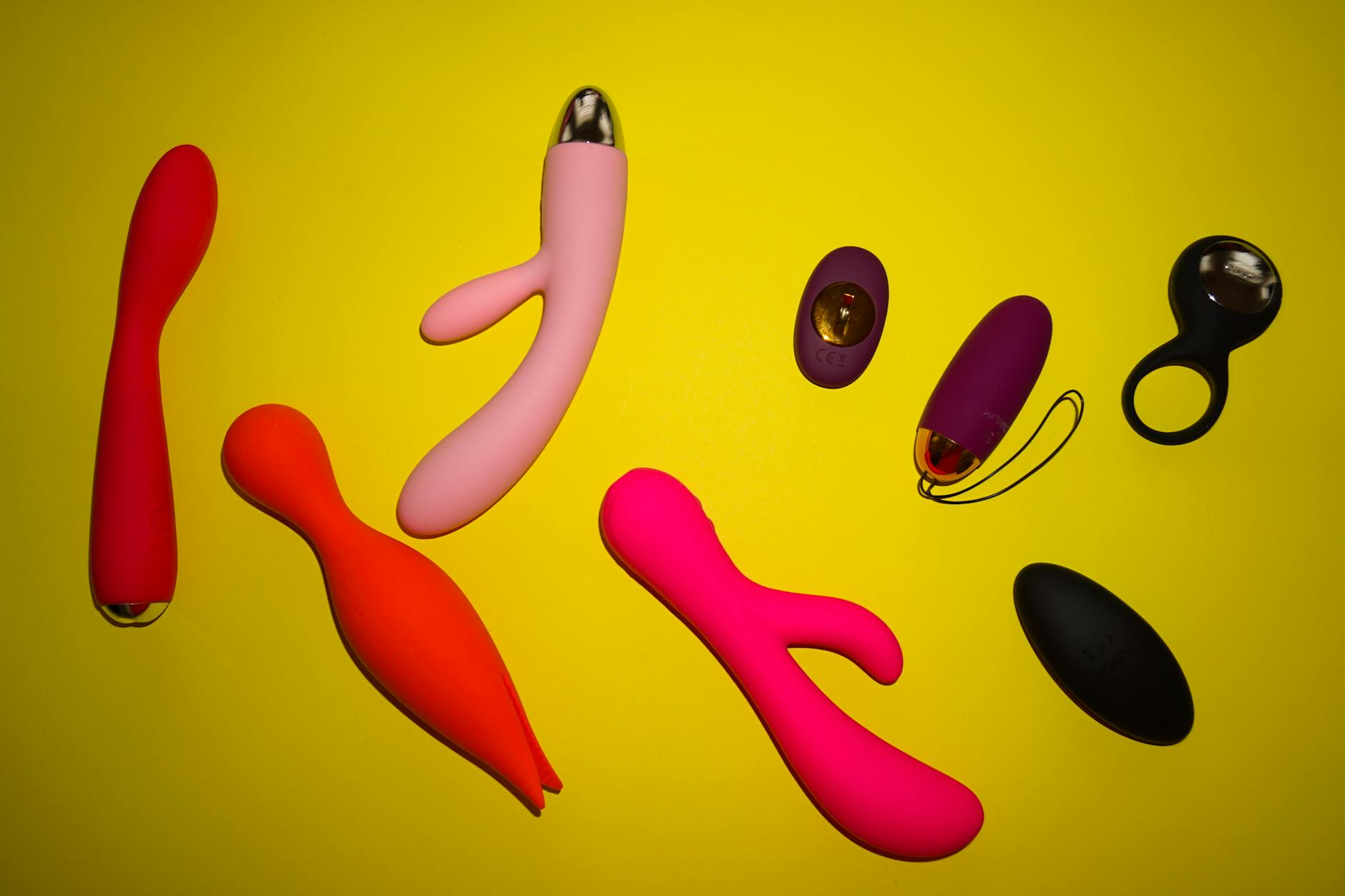
Photo by cottonbro studio on Pexels
The conversation you need to have first
Before you bring a lemon vibrator into your shared pleasure, you have to talk about the real thing: the desire mismatch itself.
Here's what that conversation is not: it's not about convincing your partner they're wrong for wanting sex more often. It's not about defending yourself for wanting it less. It's not about keeping score.
Here's what it is: a chance to get curious about what's actually going on underneath the numbers.
If you're the lower-desire partner, ask yourself first: Is this about me, or about us? Is this about my body (medication side effects, hormones, fatigue)? Is this about my brain (stress, work pressure, past trauma)? Is this about the relationship (resentment, disconnection, unresolved conflict)? Or is it just how you're wired, and that's completely valid too?
Then tell your partner what you find. Not "I don't want to have sex" but "I've noticed I want sex maybe once a week, and I think it's partly stress and partly I need more emotional connection first." Specificity matters because it gives your partner something to work with instead of just feeling shut down.
How to actually use a lemon vibrator together when desire mismatches
Three approaches, depending on what your dynamic needs:
Approach 1: Scheduled, low-pressure touch. Set a day (say, Sunday afternoon) where you both know that's your time to explore sensation together. No performance, no obligation to orgasm, no expectation of penetration. You might use a Lem or other clitoral vibrator for 15-20 minutes while your partner is present and attentive. This removes the spontaneity that often triggers the lower-desire partner's anxiety about "when is this happening," and it removes the uncertainty for the higher-desire partner about "when will they want me."
Approach 2: Solo plus presence. You use a lemon clitoral vibrator solo while your partner is in the room. They might touch you, or they might just be present. This helps the higher-desire partner feel included without putting pressure on you to perform arousal on their timeline. And it usually feels less intense than partnered sex, which helps the lower-desire partner actually relax.
Approach 3: Couples play with a focus shift. Instead of sex being about your arousal plus their arousal plus penetration, it becomes about your pleasure first, then theirs. You use a lemon vibrator to build your own sensation and get comfortable with your partner watching and participating. Then, once you've had your orgasm (or not, if that's not where it goes), you can engage with their pleasure however feels right that day.
The key across all three: taking the pressure off you to produce desire or arousal on demand.
Timing and seasons matter
One thing I see couples miss is that desire often fluctuates. You might have higher libido in spring, lower in winter. You might have higher desire in the first year of a relationship and lower five years in. You might have lower desire when you're burnt out at work and higher when you're on vacation.
Instead of treating this as a fixed problem, treat it as a seasonal thing. Some months you'll want partnered sex twice a week. Other months you'll want once a week. Some periods you'll want just solo time with a lemon vibrator, no partner involved.
Tell your partner this. "In September I'm usually exhausted, so I expect my libido will be lower. Let's plan for that." "After our anniversary, I usually get more playful sexually. That might be a good time for us to explore together."
This removes the surprise and sting from both of you.
What to actually do with the resentment
If you've been in a mismatched libido situation for a while, there's probably resentment on both sides. Your partner might resent that you don't want them. You might resent that they're always asking. That resentment won't disappear just because you add a toy to the routine.
You might need a therapist who specializes in couples work to actually address it. I'm serious about that. This isn't a failure on your part. It's recognizing that some conversations are easier with a third person who's trained to help.
But you can also start small: stop having sex when you don't actually want to. That's the biggest resentment builder, and it's also the easiest thing to change. When you stop saying yes out of obligation, you can start exploring what you actually want.
Maybe you actually want foreplay without penetration. Maybe you want sex twice a month instead of twice a week. Maybe you want to use a lemon vibrator solo on Tuesday and have partnered time on Saturday. Whatever it is, that's the place to build from.
When libido mismatch signals something bigger
Sometimes lower libido isn't about desire at all. It's about unresolved anger, untreated depression, past trauma, or a relationship that's fundamentally disconnected.
If you're using a lemon vibrator with your partner but you still feel distant, still feel pressured, still feel resentful, that's a sign to get help. A vibrator can bridge a small gap. It can't fix a broken relationship.
Similarly, if your partner reacts badly to the idea of using a vibrator together (if they feel threatened, if they think it means you're not attracted to them), that's information too. That's about their own insecurity and possibly your dynamic being worth some professional attention.
But in most cases, when both people actually want to connect and are willing to get curious about what's in the way, a combination of honest conversation and exploring pleasure together with tools like the Lem works.
The thing that actually matters
Honestly, the tool doesn't matter as much as the willingness. You could use a lemon vibrator, a wand, or your own hand. The point is that you're both choosing to show up, to explore sensation without shame, and to let pleasure be something you navigate together instead of something one of you is failing at.
That's what closes the gap. Not matching libido. Not performing desire you don't feel. But actually, genuinely prioritizing each other's pleasure and being willing to find creative ways to do that.
Your partner's higher libido is real. Your lower libido is also real. Both matter. And the two of you can build something that works for both of you if you're willing to get uncomfortable in the conversation first.
People also ask
Can using a vibrator actually increase my libido?
Not directly. Vibrators don't change your hormones or your underlying desire. But they can increase your comfort with pleasure and reduce the performance anxiety that sometimes sits on top of lower libido. If you feel less pressure, you might actually want sex more. But that's about the emotional safety, not the toy.
Should I use a lemon vibrator during sex with my partner if I have lower libido?
Maybe. It depends on what you want. Some people find that using a clitoral vibrator during partnered sex helps them relax and get present because they're not worried about "taking too long." Others find that it adds pressure. Start with solo use and see what feels right, then talk to your partner about whether adding it to partnered time feels good.
What if my partner feels threatened by me wanting to use a vibrator?
That's worth addressing directly. Many partners worry that a vibrator means you're not attracted to them or that it replaces them. The truth is usually the opposite: a lemon clitoral vibrator often helps couples stay connected because it takes pressure off the lower-desire partner to "perform." Have the conversation. Explain that it's about what feels good, not about them being inadequate. If they're not open to it after a real conversation, that might be worth exploring with a therapist.
How often should we be using a lemon vibrator if we have mismatched libido?
There's no "should." Some couples find that doing it once a week works. Others do it twice a month. The point is to find something that feels good for both of you and that doesn't add more pressure to an already tense dynamic. Start small. Maybe once a week for a month and see how you both feel.
Can lower libido be a sign of something medical?
Absolutely. Medication side effects, thyroid problems, hormonal imbalance, and a dozen other physical issues can tank libido. If you haven't talked to a doctor about this, do that first. A vibrator can help with pleasure, but it won't fix an underlying medical issue.
What if the problem is actually that I'm not attracted to my partner anymore?
That's a different conversation entirely, and it might be a sign that the relationship itself needs to be examined. Attraction can change. Sometimes it comes back. Sometimes it doesn't. But if the real issue is that you don't want your partner, no vibrator is going to fix that. You need a couple's therapist or a real conversation about whether you both want to be in this relationship.
The bottom line
Mismatched libido feels like a problem you can't solve. But what it really is: an invitation to get honest with each other and with yourselves about what you actually want and what gets in the way. A lemon vibrator is just a tool that can help you explore pleasure together instead of one of you always pushing and the other always resisting.
The real work is the conversation. But if you're both willing to have it, tools like a clitoral vibrator from Helos Nancy can actually help you both feel seen and desired, even when the frequency doesn't match.